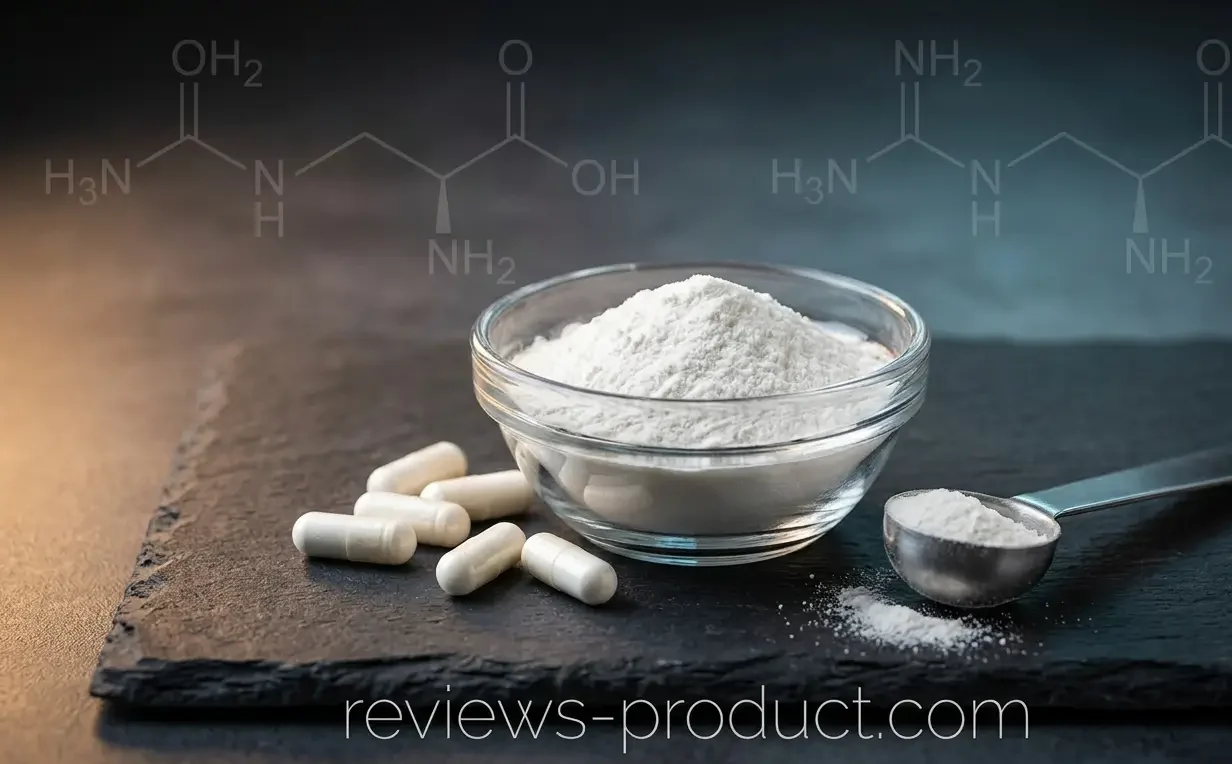
L-Arginine: Benefits, Uses and What You Should Know

L-Arginine is one of the most studied amino acids in modern nutritional science. As the body's primary precursor to nitric oxide, a molecule that plays a fundamental role in blood vessel relaxation and cardiovascular function, L-Arginine has attracted significant attention from researchers and health-conscious adults alike. Here's what the science says about its benefits, how it works in the body, and some surprising facts you may not know.
Key Takeaway
L-Arginine is a semi-essential amino acid that converts into nitric oxide (NO) in the body, supporting blood vessel dilation, healthy circulation, and cardiovascular function. While healthy adults typically produce enough L-Arginine through diet and internal synthesis, supplementation has been studied for its potential role in supporting heart health, exercise performance, and immune function.
What Is L-Arginine?
L-Arginine is a semi-essential (or conditionally essential) amino acid, meaning the body can produce it on its own under normal circumstances, but may require additional intake during periods of illness, stress, or rapid growth. It is found naturally in protein-rich foods such as poultry, red meat, fish, dairy, nuts, seeds, and legumes.
In the body, L-Arginine serves as the sole substrate for the enzyme nitric oxide synthase (NOS), which converts it into nitric oxide (NO) and L-Citrulline. This nitric oxide pathway is central to vascular health, as NO signals the smooth muscle cells in blood vessel walls to relax and dilate, allowing for improved blood flow throughout the cardiovascular system. Beyond circulation, L-Arginine is also involved in protein synthesis, wound healing, immune cell function, and the release of growth hormone [1].
Potential Benefits of L-Arginine
L-Arginine has been the subject of extensive research across multiple areas of human health. Here are the benefits where the scientific evidence is most developed.
Heart Health and Blood Vessel Function
The most well-established benefit of L-Arginine is its role in nitric oxide production, which directly supports cardiovascular function. Nitric oxide promotes vasodilation, helping blood vessels relax and expand to maintain healthy blood flow. Research has examined L-Arginine supplementation in the context of endothelial function, with clinical studies suggesting it may help support healthy blood pressure levels and overall vascular health in certain populations [1].
Blood Flow and Vascular Support
Because nitric oxide is a key regulator of blood vessel tone, L-Arginine supplementation has been studied for its potential to support healthy circulation. Improved blood flow has wide-ranging implications, from cardiovascular wellness to exercise recovery and extremity warmth. This mechanism also underlies much of the interest in L-Arginine for both athletic performance and general wellness in aging adults.
Exercise and Physical Performance
L-Arginine is a popular ingredient in pre-workout and sports nutrition supplements due to its role in nitric oxide-mediated vasodilation. By supporting increased blood flow to working muscles, L-Arginine may help improve oxygen and nutrient delivery during physical activity. Some studies have examined its effects on exercise tolerance and recovery, though results vary depending on the population studied and the form of L-Arginine used.
Immune Function and Wound Healing
L-Arginine plays an important role in immune system regulation, particularly in T-cell proliferation and macrophage activity. It is also involved in collagen synthesis and tissue repair, making it relevant to wound healing and post-surgical recovery. Some clinical settings have explored L-Arginine supplementation in hospitalized patients and individuals recovering from surgery to support immune response and tissue regeneration.
Metabolic Health and Insulin Sensitivity
Emerging research has examined L-Arginine's potential role in metabolic health. Studies suggest that L-Arginine supplementation may help support insulin sensitivity and glucose metabolism through its effects on nitric oxide pathways and antioxidant defense. A long-term follow-up study found that L-Arginine supplementation was associated with a reduced incidence of metabolic concerns in high-risk individuals, though more research is needed to confirm these findings [1].

Fascinating Facts About L-Arginine
Did You Know?
- Its discovery led to a Nobel Prize — The discovery that L-Arginine is the precursor to nitric oxide was part of the research that earned Robert Furchgott, Louis Ignarro, and Ferid Murad the Nobel Prize in Physiology or Medicine in 1998. Their work fundamentally changed our understanding of cardiovascular biology.
- Nitric oxide was named "Molecule of the Year" — In 1992, the journal Science named nitric oxide its "Molecule of the Year" due to its unexpected and wide-ranging biological significance, from blood vessel regulation to immune defense and neural signaling.
- Your body recycles it — When L-Arginine is converted to nitric oxide, it also produces L-Citrulline as a byproduct. The kidneys then convert L-Citrulline back into L-Arginine, creating an efficient recycling pathway known as the Arginine-Citrulline cycle.
- Nuts are a surprising top source — While most people associate amino acids with meat, pumpkin seeds, walnuts, and almonds are among the richest dietary sources of L-Arginine per serving, making it accessible to plant-based eaters as well.
- It becomes "essential" under stress — Under normal conditions, the body produces enough L-Arginine internally. But during illness, injury, surgery, or intense physical stress, demand can exceed production, making dietary or supplemental intake more important.
- It's one of the most-studied amino acids in history — L-Arginine has been the subject of thousands of published studies spanning cardiovascular health, immunology, sports science, metabolic research, and wound healing, making it one of the most thoroughly investigated nutrients in modern science.
Safety Considerations
L-Arginine is generally well-tolerated at typical supplemental doses (2 to 6 grams per day) in healthy adults. The most commonly reported side effects are mild and digestive in nature, including bloating, abdominal discomfort, or diarrhea, particularly at higher doses.
However, L-Arginine may interact with certain medications, including blood pressure drugs, blood thinners, and diabetes medications. Importantly, individuals who have experienced a heart attack should not take L-Arginine supplements unless specifically directed by their physician, as one clinical trial raised concerns about safety in this population. As with any supplement, consult a healthcare provider before starting L-Arginine, particularly if you have existing cardiovascular conditions or take prescription medications.
Frequently Asked Questions
Sources
- Forzano, I. et al. (2023). "L-Arginine in Diabetes: Clinical and Preclinical Evidence." Cardiovascular Diabetology, 22, 89. Additional supporting references: Kurhaluk, N. (2023). "The effectiveness of L-arginine in clinical conditions associated with hypoxia." International Journal of Molecular Sciences, 24(9), 8205; Bode-Böger, S.M. et al. (2003). "Oral L-arginine supplementation improves endothelial function in healthy individuals older than 70 years." Vascular Medicine, 8(2), 77-81.
Disclosure: Every product is independently selected by our editors. Things you buy through our links may earn us a commission. Learn more about our review process here.
Medical Disclaimer: This article is for informational purposes only and does not constitute medical advice. These statements have not been evaluated by the Food and Drug Administration. Always consult a qualified healthcare provider before starting any supplement.