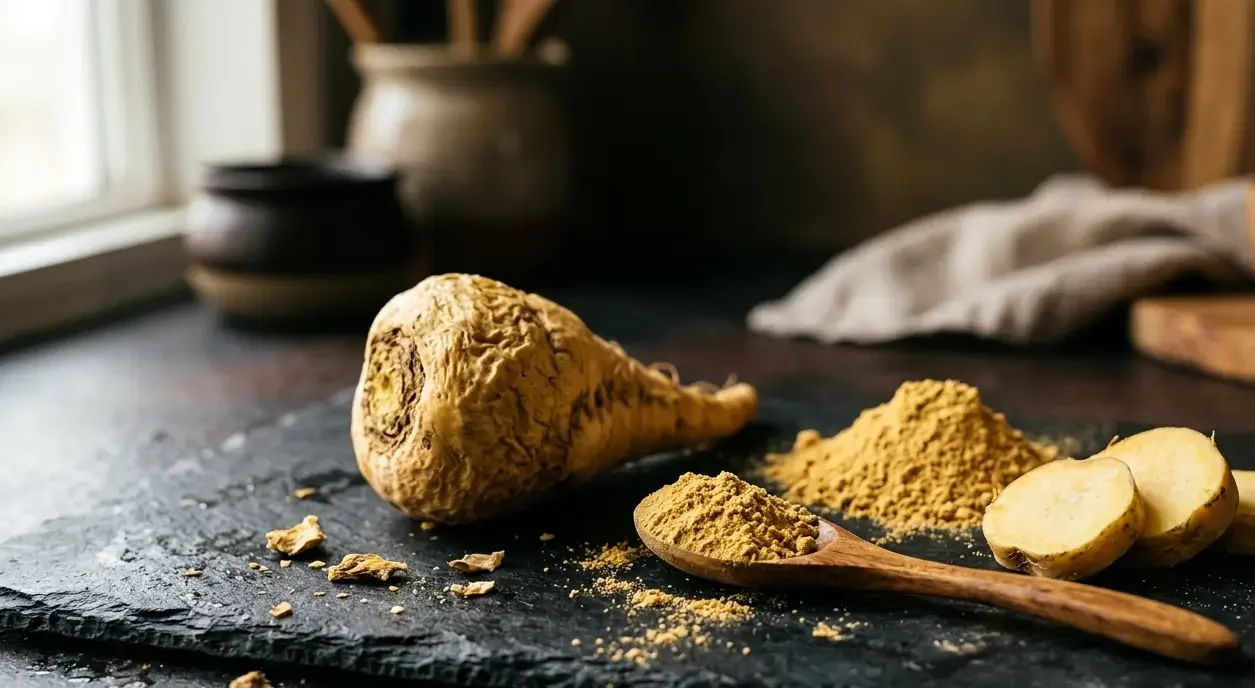
Muira Puama Extract: Benefits, Uses and Fascinating Facts

Muira Puama is one of the Amazon rainforest's best-kept botanical secrets. Known scientifically as Ptychopetalum olacoides, this small tree has been used by indigenous Amazonian communities for centuries as a nerve tonic and vitality booster. Today, modern research is beginning to explore the science behind its traditional reputation. Here's what you should know about Muira Puama extract, its potential benefits, and some fascinating facts about this remarkable plant.
Key Takeaway
Muira Puama extract has a centuries-long history of traditional use as a "brain tonic" in the Amazon. Pre-clinical research suggests it may contain compounds that support cognitive function, reduce stress, and promote overall vitality, though human clinical trials remain limited and further research is needed to confirm these effects.
What Is Muira Puama?
Muira Puama (Ptychopetalum olacoides Bentham) is a flowering plant from the Olacaceae family, native to the Brazilian Amazon rainforest. The name "Muira Puama" translates roughly to "potency wood" in the Tupi language, reflecting the plant's long-standing traditional reputation as a tonic for strength and vitality.
The roots and bark are the primary medicinal parts used, traditionally prepared as alcoholic infusions, tinctures, and teas. European explorers brought Muira Puama back to the continent in the early 20th century, where it gained popularity as a natural wellness remedy across pharmacies in England, France, and Germany.
Potential Benefits of Muira Puama Extract
While large-scale human clinical trials are still needed, pre-clinical research and a growing body of laboratory studies suggest several potential benefits of Muira Puama extract. Here are the areas where the evidence looks most promising.
Memory and Brain Health
One of the most well-researched aspects of Muira Puama is its potential cognitive support. Studies conducted at the Universidade Federal do Rio Grande do Sul in Brazil found that an ethanol extract of Ptychopetalum olacoides improved memory retrieval in both young and aging mice, with results observed in multiple learning paradigms. The researchers also identified anticholinesterase activity, a mechanism shared by several approved cognitive support medications, suggesting a neurochemical basis for the plant's traditional use as a "brain tonic" [1].
Antioxidant Activity in the Brain
Research has also explored Muira Puama's neuroprotective properties. Laboratory studies demonstrated that the extract increased cellular viability and reduced free radical generation in brain tissue subjected to oxygen and glucose deprivation, a model that simulates conditions similar to stroke. These antioxidant effects suggest the plant may contain compounds that help protect neural tissue from oxidative stress, a key factor in age-related cognitive decline [1].
Stress Relief and Mood Support
Muira Puama extract has demonstrated adaptogenic and anti-stress properties in research settings. Studies suggest it may help the body better cope with physical and mental stress, while also showing potential antidepressant-like effects in animal models. These properties align with its centuries-long traditional use among Amazonian communities for managing stressful situations and supporting emotional balance.
Energy and General Wellness
Traditional users of Muira Puama have long valued it as an anti-fatigue tonic, and preliminary research supports this reputation. The plant's bioactive compounds, which include tannins, flavonoids, and several terpenoids, may contribute to improved physical endurance and reduced fatigue. Many modern supplement formulas include Muira Puama extract as part of broader energy and vitality blends.

Fascinating Facts About Muira Puama
Did You Know?
- The name means "potency wood" — In the Tupi language spoken by indigenous Amazonian peoples, "Muira" means wood and "Puama" means potency or strength, reflecting centuries of traditional use as a vitality tonic.
- It was listed in the British Herbal Pharmacopoeia — By the 1920s, Muira Puama had gained enough recognition in Europe to be formally listed in the British Herbal Pharmacopoeia, one of the most respected herbal references of the era.
- It works differently from most herbal teas — Muira Puama contains resinous compounds that are not easily soluble in water. This means alcohol-based tinctures and standardized extracts tend to deliver its active compounds more effectively than simple teas.
- It interacts with multiple neurotransmitter systems — Research has shown that Muira Puama's effects on memory involve beta-adrenergic receptors, dopamine D1 receptors, and serotonin pathways, suggesting a complex and multi-targeted mechanism of action rather than a single pathway.
- Brazilian researchers lead the science — The majority of published studies on Ptychopetalum olacoides come from Brazilian universities, particularly the Universidade Federal do Rio Grande do Sul, where researchers have studied its cognitive and neuroprotective effects for over two decades.
- It's found in dozens of global supplement formulas — Despite originating from a specific region of the Amazon, Muira Puama is now included in herbal products and multivitamin supplements across American and European markets, often combined with other botanicals like Ginkgo Biloba and adaptogenic herbs.
Safety Considerations
Muira Puama has a long history of traditional use and is generally considered well-tolerated based on available data. No significant toxicity has been reported in the pre-clinical studies conducted to date. However, it's important to note that formal long-term safety studies in humans are still limited.
As with any botanical supplement, pregnant or nursing women, individuals under 18, and those taking prescription medications, particularly for blood pressure, hormonal conditions, or the nervous system, should consult a healthcare provider before using Muira Puama extract.
Frequently Asked Questions
Sources
- da Silva, A.L. et al. (2004). "Memory retrieval improvement by Ptychopetalum olacoides in young and aging mice." Journal of Ethnopharmacology, 95(2-3), 199-203. Additional supporting studies: Siqueira, I.R. et al. (2003). "Ptychopetalum olacoides, a traditional Amazonian nerve tonic, possesses anticholinesterase activity." Pharmacology Biochemistry and Behavior, 75(3), 645-650; Siqueira, I.R. et al. (2004). "Neuroprotective effects of Ptychopetalum olacoides on oxygen and glucose deprivation induced damage in rat hippocampal slices." Life Sciences, 75(15), 1897-1906.
Disclosure: Every product is independently selected by our editors. Things you buy through our links may earn us a commission. Learn more about our review process here.
Medical Disclaimer: This article is for informational purposes only and does not constitute medical advice. These statements have not been evaluated by the Food and Drug Administration. Always consult a qualified healthcare provider before starting any supplement.